Tuesday, November 30, 2010

Weapons of Mass Deception—The Media’s Ability to Sell Us Anything


“The power of the press in America is a primordial one. It sets the agenda of public discussion; and this sweeping political power is unrestrained by any law. It determines what people will talk and think about—an authority that in other nations is reserved for tyrants, priests, parties and mandarins.”
Theodore White

The above quote, from noted political analyst Theodore White, framed the mass media’s ability to influence its viewers in slightly chilling, almost totalitarian tones. Journalism professors Maxwell McCombs and Donald Shaw used somewhat less insidious tones when they constructed their “agenda-setting” theory, first referred to in 1972 in the days of the Watergate scandal. In the decades that have followed, media analysts have persisted in examining the ways that mass communication outlets present what is seen and heard as news, digging for truth and attempting  to ferret out bias and corruption. Former CNN and ABC News producer Danny Schechter fired his salvo at this large moving target with the 2004 documentary film Weapons of Mass Deception.

McCombs and Shaw were conducting studies to determine media agenda as early as 1968, and their research expanded into correlating media and public agendas during the 1976 presidential campaign. Patterns were noted in which the media’s agenda led the way for specific issues to become major parts of the public agenda approximately four to six weeks after first news presentation. With the rapidly accelerated 24-hour news cycle of 21st-century mass communication, those four to six weeks have likely been trimmed to a matter of days.
               
Schechter takes the relationship between media and public concerns all the way back to Vietnam, drawing parallels between correspondents’ willingness, if not aggressiveness, in uncovering war atrocities and American public disapproval of the war as a whole. The United States military learned its lesson, placing restrictions on war correspondents over the places they would be allowed to access and what they would be allowed to witness. By the time of the 1991 war in the Persian Gulf, shots of whiz-bang weaponry and big explosions witnessed from distance took the place of stacked-up corpses in front of the few cameras that were able to capture battlefield images.
               
By the time of September 11, 2001, any plans to topple totalitarian regimes such as Saddam Hussein’s in Iraq needed substantial groundswells of public support, and Schechter depicts media outlets as more than willing to assist. Statistics are noted that claim over 70 percent of news sources during a three-week span in early 2003 were pro-war voices, allowing the government to keep its message moving smoothly to the American public. Those annoying people milling about in the streets and waving anti-war placards? They were shown in wide shots, pictures were displayed of their signs, but very few voices were heard offering any cogent anti-war sentiment. If protesters were heard, it was as a group, chanting melodious slogans.

Going right along with the media’s ethos of assisting dissemination of military messages, the war correspondents were able to stick around Baghdad and other assorted war zones because, as independent reporter Robert Young Pelton puts it, “…if you’re gonna have shock and awe, you need somebody to record it.” The media were having their agenda set for them in exchange for continued access. Even the idea of “embedding” troops with military divisions came with ground rules that reporters feared to violate, lest the Pentagon yank them out and send them home, never to set foot on the battlefield again. Surrounding the correspondents with gung-ho young troops prepared to die for their country, forcing them to share the hardships of war together, was almost certain to color the coverage, removing any motivation to question or criticize any of the government’s choices or the soldiers’ methods in carrying out those orders.
               
McCombs and Shaw coined the term “need for orientation” to describe the people who are most likely to have their world perceptions shaped by media reports. Relevance (amount of concern) and uncertainty (lack of knowledge) were both in high supply during the war in Iraq. Middle America was highly concerned about threats by terrorists, whether from Iraq or elsewhere, a concern that was repeatedly and sometimes gleefully stoked by media reports linking Saddam with such attacks. Thus, stories about what was happening were relevant. At the same time, American audiences had no access to the inner workings of military planning overseas, so every word that came across the airwaves carried the same air of truth as every other word on other channels. It all depended on a viewer’s news source of choice. After all, the reporters were there and we were not, so they obviously knew what was happening much better than we did.
               
Schechter mentions that the military considered the war a product to be marketed, much like a new soft drink or toothpaste. Concerns about how the fighting was to be packaged went all the way down to the name. The conflict was originally code-named “Operation Iraqi Liberation” until strategists noted that such a name carried an unfortunately telling acronym. Painting the war as a patriotic defense of liberty in the face of terrorism would go over like a fart in church if the operation was code-named “O.I.L.” Such a gaffe would completely undermine the Bush administration’s effort to influence public support and behavior.
               
Weapons of Mass Deception (which you can watch here)shines an unflattering light on the United States government, exposing parlor tricks designed to keep the media at arms’ length. The fact that such capital and effort is expended to shape the message that is presented to Middle America indicates that the government is highly versed in McCombs and Shaw’s agenda-setting theory, and it’s not above exploiting that knowledge to rally support to its own pet causes. If it perverts freedom of the press, spits on freedom of speech, and paints media outlets into a self-serving, money-grubbing, ratings-grabbing corner…well, that can all be written off as “collateral damage,” can’t it?

Sunday, November 28, 2010

High (Narrative) Fidelity: Everyone's Got a Story

University of Southern California communication professor Walter Fisher has advanced the theory that humans are narrative beings, creatures that “experience and comprehend life as a series of ongoing narratives, as conflicts, characters, beginnings, middles, and ends.” We tell each other stories about ourselves as a foundation of basic interpersonal communication. Other theories, like social penetration theory and its emphasis on self-disclosure, have Fisher’s narrative paradigm as their foundations. After all, self-disclosure is the telling of stories that reveal who we are as people based on our past experiences.

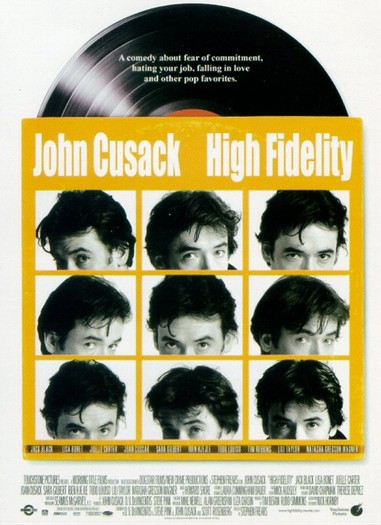
The 2000 film High Fidelity, starring John Cusack, is a study in the uses and benefits of narrative self-disclosure. Record store owner Rob Gordon (Cusack) goes through a messy breakup, which prompts him to engage in a massive round of self-evaluation and -examination. Rob breaks the fourth wall, speaking directly into the camera as he shares the stories of the five most brutal breakups from his past, including current girlfriend Laura, in an attempt to discover the cause of his difficult luck with relationships.

The very title of the movie is a pun on several different levels. Considering the large role that Rob’s record store and music culture in general plays in the film, the allusion to high fidelity stereo systems is inescapable. There’s also the concept of fidelity in relationships, one with which Rob seems somewhat unfamiliar in his earlier romances. Finally, there’s the concept of narrative fidelity, which is a test applicable to any story, whether in print or on film.

Narrative fidelity is defined as something in a story that strikes a responsive chord in the listener. Essentially, does the story ring true with the listener? Does it seem similar to a story that the listener might tell about themselves? Rob’s issues with commitment, self-absorption, and other general insecurities are considered an unfortunate, yet ever-present, peril of the human condition. Another unfortunate human tendency, however, is one in which we overlook our own culpability in stories of past emotional difficulties.

Rob and Laura’s mutual friend Liz (played by Cusack’s sister Joan) comes barreling into Rob’s store and screams at him that he’s a “fucking asshole.” In the scene that follows, Rob gives us some very good indications of what might have provoked this hostile outburst from the previously sympathetic Liz. Rob cops to offenses such as cheating on a pregnant Laura, prompting her to terminate the pregnancy. (And as an aside, if there’s ever a crime that qualifies as “high infidelity,” it’s that one…sorry.) This is the first breakup in which Rob admits that his actions may have directly pushed his girlfriend away, changing the tone of his narratives from “Why did I get dumped?” to “This is why I got dumped.”

Without Rob admitting to his prior indiscretions, the entire story’s coherence could have been sternly tested. Fisher’s ultimate sign of narrative coherence is based on whether or not characters act in a reliable manner, and Liz’s outburst seems anything but reliable after her neutral ground in earlier conversations with Rob. As the storyteller, Rob appears to understand that the viewer’s been thrown for a loop, wondering “What was that all about?” Leaving out the facts here would have undermined his credibility as a narrator, leaving major loose ends in the narrative.

The coherence of the story is important to Rob as a narrator, so much so that he goes in search of his own endings. Each breakup is its own little story, and Rob seeks out each woman, hoping to gain insight into their motivations. He was as much an observer as a participant in those stories, and for him, there are facts missing that the narrators need to fill in. In many cases, he learns new information that prompts him to reassess his version of each story. Never mind the fact that his closure is the only closure he’s interested in. When one of the exes, Penny Hardwick (played by Joelle Carter), rips Rob for his insensitive line of questioning, his only reaction is, “That’s another one I don’t have to worry about! I should’ve done this years ago!”

One of Rob’s narrators is the worldly and sophisticated Charlie Nicholson, played by Catherine Zeta-Jones. Charlie appears to sit at the root of Rob’s insecurities, as he considers her the woman that was so far out of his league that he could never believe he was with her, even when he was with her. When he gets in touch with her to meet up, she immediately seeks assurance that he’s not interested in “rehashing the past,” showing no desire to live in any sort of narrative paradigm, especially not anyone else’s. Of course, Rob shows up and asks the question, prompting Charlie to give him an assessment somewhat more honest than he would have preferred.

Pop music is a major supporting character in the film, and early on, Rob gives the viewer the impression that music may be the antagonist. He asks, “Did I listen to pop music because I was miserable, or was I miserable because I listened to pop music?” The film addresses the important role of music in people’s lives, playing with the old “soundtrack of your life” cliché. Rob’s tendency to make Top Five lists, such as Top Five Songs to Play on Monday Morning or Top Five Side-One-Track-One Songs, illustrates the common tendency to associate music (which is essentially other people’s narratives set to instrumentation) with particular events or places.

After breakups, Rob tends to refresh his environment by reorganizing his voluminous record collection. When Laura leaves him, he decides to implement his most ambitious organizational scheme of all. Never mind the alphabetical or the chronological, he decides to organize the albums in order of purchase, a form of autobiographical composition. Anyone seeking to understand the order of albums on the shelf would have to ask Rob to explain, allowing him another occasion to tell his own life story.

In the end, “High Fidelity” is the story of a man for whom the rest of the world serves as supporting characters in his own narrative. To his credit, Rob Gordon allows others’ reactions to particular scenes in his story to influence the direction in which he takes said story’s future events.